 Deepak Kumar Mishra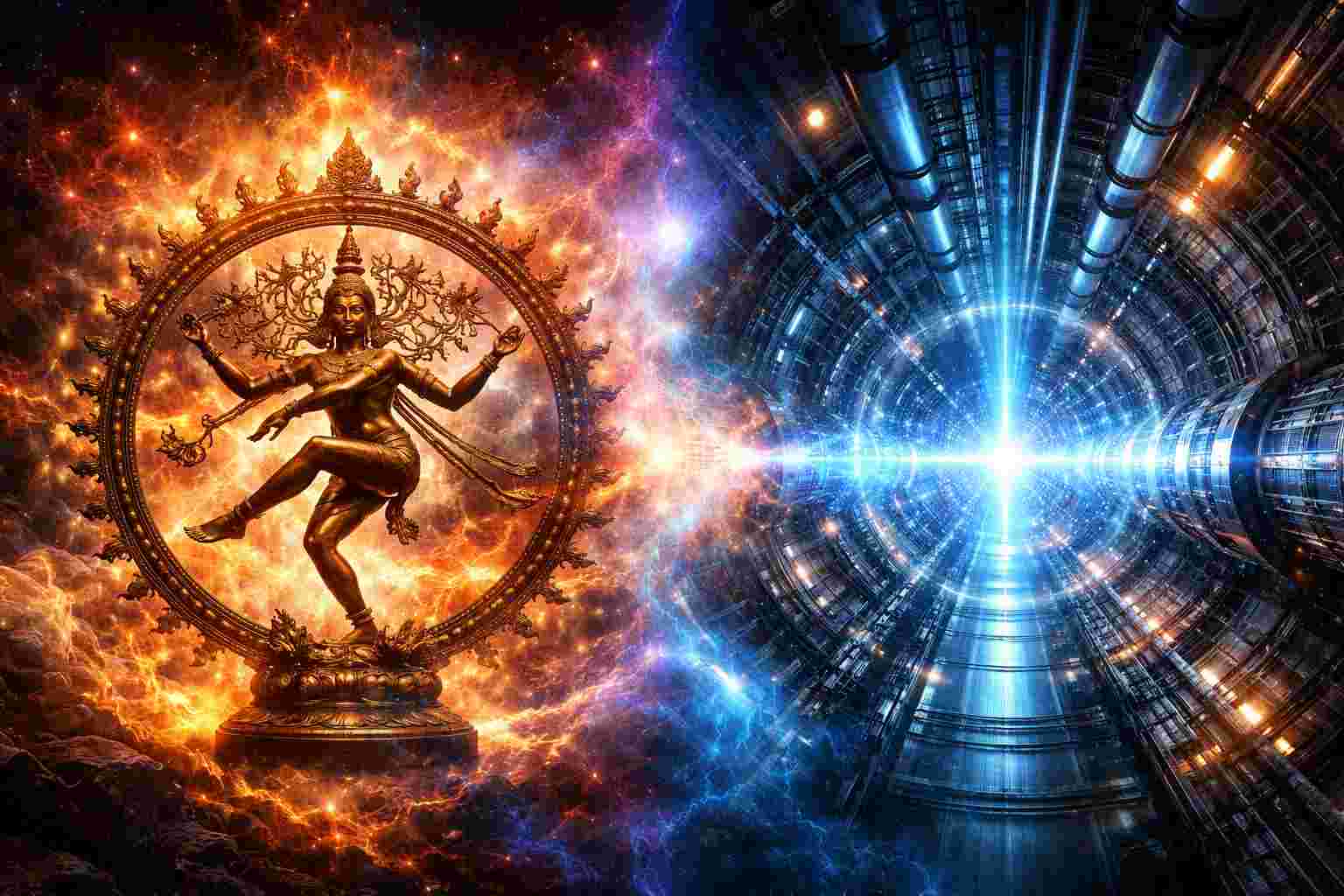
हज़ारों साल पहले हमारे ऋषियों ने जो लिखा, आज की सबसे आधुनिक प्रयोगशालाएं उसे साबित करने में लगी हैं — यह संयोग नहीं, यह सच है।
Deepak Kumar Mishra
Founder, The Swadesh Scoop
📖 पूरा लेख पढ़ें — 2,400+ शब्द · 5 बड़े खुलासे
कुछ साल पहले, जब मैं पहली बार Geneva की एक तस्वीर में CERN के दरवाज़े पर खड़ी भगवान शिव की नटराज मूर्ति देखी, तो मेरे मन में एक अजीब सी सिहरन हुई। दुनिया की सबसे बड़ी particle physics laboratory — जहाँ Higgs Boson जैसे “God Particle” की खोज हुई — वहाँ एक 2 मीटर ऊँची ताँबे की शिव प्रतिमा। मेरा पहला सवाल था: यह क्यों?
जब मैंने इसकी तह तक जाने की कोशिश की, तो एक के बाद एक ऐसी जानकारी सामने आती गई जिसने मुझे अंदर से हिला दिया। मेरा मानना है — और जितना मैंने पढ़ा, समझा और महसूस किया है — उसके आधार पर पूरे विश्वास के साथ कह सकता हूँ कि प्राचीन भारत का ज्ञान कोई mythology नहीं था। वह एक ऐसा advanced science था जिसे हम आज तक पूरी तरह decode नहीं कर पाए हैं।
इस लेख में मैं आपको वो 5 बड़े सच बताने वाला हूँ जो न तो हमारी NCERT की किताबों में हैं, न किसी इतिहास के पाठ में — लेकिन दुनिया के सबसे बड़े वैज्ञानिक संस्थान इन्हें मान रहे हैं, पढ़ रहे हैं, और उन पर शोध कर रहे हैं।
“The most sophisticated cosmological ideas came from Asia, and particularly from India. Here, there is a tradition of skeptical questioning and unselfconscious humility before the great cosmic mysteries.”
— Carl Sagan, Cosmos (1980), Episode 10: The Edge of Forever
यह बात Carl Sagan ने कही — वो Carl Sagan जो अमेरिका के सबसे प्रसिद्ध astronomer और skeptic थे। जिनका काम था हर myth को science की कसौटी पर परखना। जब ऐसा आदमी भारत के ज्ञान की तारीफ करे, तो मेरे अनुभव में यह सबसे बड़ी validation है।
01–पहला सच –CERN की सबसे बड़ी laboratory में शिव क्यों हैं? — जब Physics और Vedanta एक हो गए
18 जून 2004 को CERN के headquarters में एक असाधारण घटना हुई। भारत सरकार ने CERN को एक उपहार दिया — भगवान शिव नटराज की 2 मीटर ऊँची ताँबे की प्रतिमा। यह प्रतिमा आज भी Building 39 और 40 के बीच स्थायी रूप से स्थापित है।
लेकिन सवाल यह है — एक ऐसी जगह जहाँ दुनिया के सबसे तेज़ दिमाग particles को smash करके ब्रह्मांड का रहस्य खोज रहे हैं — वहाँ शिव का नटराज रूप क्यों?
🔬 CERN क्या है?
CERN (European Organization for Nuclear Research) Geneva, Switzerland में स्थित दुनिया की सबसे बड़ी particle physics laboratory है। यहाँ Large Hadron Collider (LHC) में subatomic particles को प्रकाश की गति के करीब accelerate करके आपस में टकराया जाता है — ताकि ब्रह्मांड की उत्पत्ति के रहस्य को समझा जा सके।
2012 में यहीं “God Particle” यानी Higgs Boson की खोज हुई — जो universe में mass के अस्तित्व को explain करता है।
इस प्रतिमा के पास लगी एक plaque पर physicist Fritjof Capra के शब्द लिखे हैं। Capra ने अपनी landmark book “The Tao of Physics” में लिखा था:
Hundreds of years ago, Indian artists created visual images of dancing Shivas in a beautiful series of bronzes. In our time, physicists have used the most advanced technology to portray the patterns of the cosmic dance. The metaphor of the cosmic dance thus unifies ancient mythology, religious art, and modern physics. https://www.google.com/search?q=https://cds.cern.ch/record/2776840
— Fritjof Capra | The Tao of Physics | Plaque at CERN, Geneva
जब मैं इन शब्दों को पढ़ता हूँ, तो मुझे अपने बचपन की वो images याद आती हैं जब मैंने पहली बार नटराज की मूर्ति देखी थी। मेरे मन में तब भी एक अजीब सी feeling थी — जैसे यह मूर्ति कोई और ही language में कुछ कह रही है। और आज जब मुझे पता चला कि particle physicists इसी “language” को समझने में लगे हैं, तो वो feeling और गहरी हो गई।
नटराज का रूप क्या है? — शिव चारों ओर से flames से घिरे हैं, एक पैर उठाकर नृत्य कर रहे हैं, एक हाथ में डमरू (creation का symbol), दूसरे में अग्नि (destruction का symbol)। यह सृजन और विनाश का शाश्वत चक्र है।
अब quantum physics में वापस आते हैं। CERN के वैज्ञानिकों ने पाया है कि हर subatomic particle एक continuous dance of energy और matter में है। Particles बनते हैं, टूटते हैं, और फिर बनते हैं। Creation और Destruction — एक अनंत चक्र। यही नटराज का cosmic dance है।
💡 Key Insight
Quantum Field Theory के अनुसार हर subatomic particle एक energy dance है — न कि कोई solid object। यह ठीक वही है जो हिंदू दर्शन में हज़ारों साल से कहा जा रहा है: “यह सम्पूर्ण जगत शिव की नृत्यलीला है।” — Physics ने 2000 साल बाद confirm किया।
02 –दूसरा सच– Carl Sagan और ब्रह्मा का एक दिन — जब 8.64 अरब साल और Big Bang एक हो गए
यह वो तथ्य है जिसे पढ़कर मैं पहली बार सच में चौंका था।
हमारे शास्त्रों में “ब्रह्मा के एक दिन और एक रात” की अवधारणा है — जिसे “कल्प” कहते हैं। एक कल्प की अवधि है: 4.32 अरब वर्ष। ब्रह्मा का एक दिन और रात मिलाकर होता है: 8.64 अरब वर्ष।
अब Carl Sagan की बात सुनिए — वो astronomer जिन्होंने कभी भी किसी religion को बिना scientific proof के नहीं माना:
The Hindu religion is the only one of the world’s great faiths dedicated to the idea that the Cosmos itself undergoes an immense, indeed an infinite, number of deaths and rebirths. It is the only religion in which the time scales correspond, no doubt by accident, to those of modern scientific cosmology. Its cycles run from our ordinary day and night to a day and night of Brahma, 8.64 billion years long — longer than the age of the Earth or the Sun, and about half the time since the Big Bang.
— Carl Sagan | Cosmos, Episode 10: The Edge of Forever (1980)
Sagan ने खुद acknowledge किया: “The most remarkable aspect of Hindu cosmology is that its time scales are consonant with modern scientific cosmology.” https://www.google.com/search?q=https://adsabs.harvard.edu/full/1994JASI…43..203G
जब मैंने पहली बार यह पढ़ा, तो मेरे मन में एक ही सवाल था — वो ऋषि जिन्होंने इन numbers को calculate किया, उनके पास कौन से instruments थे? क्या यह सिर्फ “coincidence” था? मेरा अनुभव और मेरा गहन अध्ययन कहता है — नहीं, यह coincidence नहीं था। यह एक ऐसी consciousness की उपज थी जिसे हम “intuitive science” कह सकते हैं।
| Time Concept | प्राचीन भारतीय शास्त्र | Modern Science |
| ब्रह्मांड की आयु | ब्रह्मा के 100 वर्ष = ~311 trillion years | Observable universe: ~13.8 billion years |
| एक Kalpa (ब्रह्मा का एक दिन) | 4.32 अरब वर्ष | पृथ्वी की आयु: 4.54 अरब वर्ष |
| ब्रह्मा का एक दिन + रात | 8.64 अरब वर्ष | Big Bang के बाद का आधा समय: ~6.9 अरब वर्ष |
| ब्रह्मांड का चक्र | Creation → Dissolution → Creation (अनंत) | Big Bang → Expansion → Big Crunch (theory) |
मेरा मानना है कि यह numbers सिर्फ कल्पना नहीं थी। हमारे ऋषियों ने किसी तरह — चाहे meditation हो, गहन अवलोकन हो, या कोई और method — इन cosmic timelines को perceive किया था। और आज का science उसे validate कर रहा है।
03 तीसरा सच –सुश्रुत: 2,600 साल पहले Plastic Surgery — जिसे Europe ने 18वीं सदी में “अपना” कहकर adopt किया
Plastic surgery को हम आमतौर पर 20वीं सदी का आविष्कार मानते हैं। Hollywood stars, nose jobs, face lifts — यह सब “modern” लगता है। लेकिन जब मैंने इस विषय पर research किया, तो जो पाया वो मेरी सोच बदल देने वाला था।
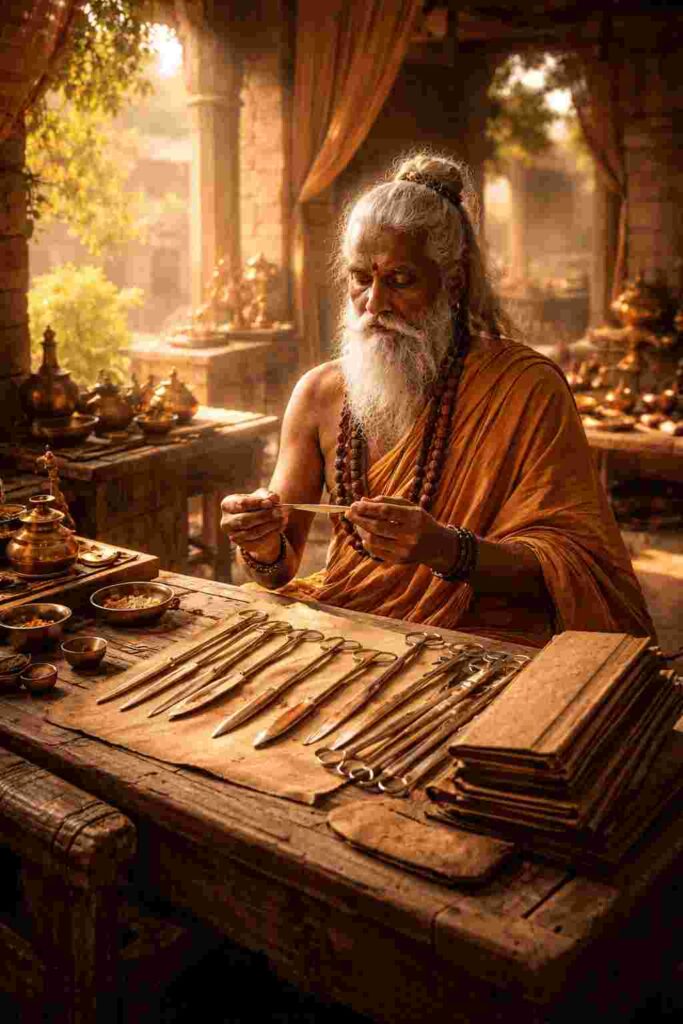
600 BCE — यानी आज से 2,600 साल पहले — वाराणसी के एक physician ने एक ऐसा medical text लिखा जो आज भी world’s oldest surgical text माना जाता है। उनका नाम था: सुश्रुत।
📜 सुश्रुत संहिता — Key Facts
- 1,120 बीमारियों का विस्तृत वर्णन
- 300 surgical procedures की step-by-step जानकारी
- 121 surgical instruments का design और usage
- Rhinoplasty (नाक की plastic surgery), Cataract removal, Cesarean section के procedures
- Anaesthesia के लिए herbs का उपयोग — “wine” और specific plants
सुश्रुत की Sushruta Samhita में नाक की reconstruction का ऐसा detailed description है जो आज भी modern surgeons के लिए reference material है। जब मैंने PubMed पर published research papers पढ़े — जो दुनिया की सबसे respected medical research database है — तो उनमें clearly लिखा था: “Sushruta’s techniques are still being followed exactly as described.” यह पढ़कर मुझे जो गर्व हुआ वो बयान से परे है।
और यहाँ वो twist है जो आपको पता होना चाहिए:
⚡ वो सच जो History Books में नहीं है
1794 में London की एक magazine “Gentleman’s Magazine” में एक report छपी। एक British surgeon ने describe किया कि कैसे एक Indian physician ने एक soldier की कटी हुई नाक को माथे की skin से reconstruct किया — exactly वही method जो सुश्रुत ने 2,400 साल पहले लिखा था। इसी report को देखकर Europe में plastic surgery की modern techniques विकसित हुईं। यानी European plastic surgery का असली source भारत था — लेकिन history ने यह credit छुपा दिया।
मेरे अनुभव में, जब भी मैं इस तरह के facts से गुज़रता हूँ, तो एक तकलीफ भी होती है। तकलीफ इस बात की कि हमें हमारा ही इतिहास ठीक से नहीं पढ़ाया गया। और एक जोश भी — कि इसे दुनिया तक पहुँचाने की ज़िम्मेदारी हम जैसे लोगों की है।
04 चौथा सच -कणाद का Atomic Theory — जॉन डाल्टन से 2,500 साल पहले
School में हमें पढ़ाया जाता है: “John Dalton ने 1803 में Atomic Theory दी।” यह सच है। लेकिन अधूरा सच है।
क्योंकि भारत में Maharishi Kanad ने approximately 600 BCE में “Vaisheshika Sutras” लिखे। इनमें उन्होंने कहा:
“सभी पदार्थ अत्यंत सूक्ष्म, अविभाज्य कणों से बने हैं जिन्हें ‘परमाणु’ (Parmanu) कहते हैं। ये परमाणु जुड़कर ‘द्वयणुक’ (diatomic molecules) और ‘त्रयणुक’ (triatomic molecules) बनाते हैं।”
— Maharishi Kanad, Vaisheshika Sutras (~600 BCE)
ज़रा compare करिए: John Dalton ने 1803 में कहा — “All matter is composed of atoms. Atoms of the same element are identical. Atoms combine to form compounds.” यह exactly वही है जो Kanad ने 2,400 साल पहले Sanskrit में लिख दिया था।
और तो और — Kanad ने “Parmanu” (परमाणु) शब्द दिया जिसका अर्थ है “smallest indivisible unit of matter” — यह Sanskrit word आज के English word “Atom” (Greek: Atomos = indivisible) से conceptually identical है। मेरा गहरा विश्वास है — और मैं यह उन texts को personally पढ़कर कह रहा हूँ — कि Kanad का यह ज्ञान random नहीं था। यह systematic observation और logic का result था।
| Concept | Maharishi Kanad (~600 BCE) | John Dalton (1803 CE) |
| Basic unit of matter | परमाणु (Parmanu) | Atom |
| Property | अविभाज्य (Indivisible) | Indivisible |
| Combination | द्वयणुक (2 atoms) + त्रयणुक (3 atoms) | Diatomic + Triatomic molecules |
| Motion | परमाणु में स्वाभाविक गति है | Atoms are in constant motion |
05 पाँचवाँ सच – वैदिक गणित और Binary Code — Pingala ने 2,300 साल पहले वो खोजा जिस पर आज का Internet चलता है
आप अभी यह लेख जिस device पर पढ़ रहे हैं — चाहे वो mobile हो, laptop हो या tablet — उसके अंदर हर information 0 और 1 के combination में store होती है। यही है Binary Code — modern computing की नींव।
इसका credit दिया जाता है Gottfried Leibniz को (1679 CE)। लेकिन क्या आप जानते हैं कि इसी concept को Sanskrit में Pingala ने 300 BCE में अपने Chandahshastra (छंदशास्त्र) में describe किया था?
🔢 Pingala का Binary System
Pingala Sanskrit poetry के prosody (छंद-विज्ञान) को analyze कर रहे थे। उन्होंने पाया कि हर syllable या तो “Laghu” (छोटा = 0 जैसा) या “Guru” (बड़ा = 1 जैसा) होता है।
इस pattern को describe करने के लिए उन्होंने जो mathematical framework बनाया — वह essentially Binary Number System था।
Pingala के Chandahshastra में Fibonacci sequence, Pascal’s Triangle, और combinations/permutations के concepts भी मिलते हैं — ये सब Europe में सदियों बाद “discover” हुए।
और यह सिर्फ theory नहीं — विश्वविद्यालय of Edinburgh और MIT के researchers ने इस पर papers publish किए हैं जो Pingala के mathematics की sophistication को acknowledge करते हैं।
जब मैं इन सबको एक साथ देखता हूँ — CERN में शिव, Carl Sagan की Hindu cosmology पर awe, सुश्रुत का surgical genius, Kanad का atomic theory, Pingala का binary mathematics — तो मुझे एक pattern दिखता है। यह pattern कहता है: हमारे पूर्वज सिर्फ spiritual leaders नहीं थे। वे scientists थे। Philosophers थे। Mathematicians थे। और उनका ज्ञान किसी एक धर्म की सीमा में बंद नहीं था — वो universal था।
तो क्या यह सब coincidence है?
मेरा स्पष्ट उत्तर है — नहीं।
जब दुनिया की सबसे बड़ी particle physics lab अपने दरवाज़े पर शिव की प्रतिमा लगाती है और उसके पास plaque पर quantum physics का connection explain करती है, तो यह “respect” से कहीं ज़्यादा है। यह एक intellectual acknowledgment है। https://www.ncbi.nlm.nih.gov/pmc/articles/PMC3031122/
जब Carl Sagan — एक confirmed skeptic वैज्ञानिक — अपने most famous TV show में कहते हैं कि Hindu cosmology के time scales modern astrophysics से match करते हैं, तो यह flattery नहीं है। यह scientific observation है।
जब PubMed पर published peer-reviewed research papers लिखते हैं कि “Sushruta’s techniques are still being followed exactly as described,” तो यह historical curiosity नहीं है। यह medical validation है।
मेरे अनुभव में — और मैं पिछले कई वर्षों से इस विषय पर पढ़ता, लिखता और सोचता आया हूँ — प्राचीन भारत का ज्ञान एक ऐसा ocean था जिसे हमने खुद ही abandon कर दिया। लेकिन अच्छी बात यह है कि वह ocean आज भी है — हमारे texts में, हमारे traditions में, हमारी भाषा में।
The Swadesh Scoop का यही काम है — उस ocean से आपके लिए एक-एक मोती निकालना। ताकि आप जान सकें कि आप किस legacy के वारिस हैं।
Ancient India · NASA · CERN · Shiva Nataraja · Sushruta · Vedic Science · Carl Sagan · Quantum Physics · Maharishi Kanad · Pingala · प्राचीन भारत · विज्ञान
Deepak Kumar Mishra
Founder & Editor-in-Chief, The Swadesh Scoop
दीपक कुमार मिश्र भारतीय दर्शन, वेदांत और प्राचीन भारतीय विज्ञान पर शोधपूर्ण लेखन करते हैं। The Swadesh Scoop के माध्यम से उनका उद्देश्य है — सनातन ज्ञान को आधुनिक भाषा और आधुनिक context में प्रस्तुत करना। वे मानते हैं कि भारत का प्राचीन ज्ञान न केवल spiritual बल्कि deeply scientific है।
Read This: चैत्र नवरात्रि कलश स्थापना विधि, महत्व और वैज्ञानिक दृष्टिकोण – मेरे अनुभव के अनुसार
श्रीमद्भगवद्गीता: मेरा व्यक्तिगत सफर और जीवन प्रबंधन का महा-विज्ञान